Log in


Dordogne and Lot-et-Garonne in region Aquitaine, France

Aquitaine Perigord France by Mike Long - France4U
Beynac Castle in the Perigord: area of Medieval Gastronomy

  Dordogne and Lot-et-Garonne Regional Info 
Share | 

Presentation Dordogne and the Lot-et-Garonne in Aquitaine

The Dordogne and the Lot-et-Garonne are two of the five départements which make up the region of Aquitaine. This whole area has been in and out of English possession since the middle ages through war and ceding by royal marriage. In more recent years, there has been an invasion of a different kind when it became a favourite holiday and second home destination for the British, and the Dutch. The Dordogne has consistently topped the popularity league tables and it is easy to see why.

Take a look at the map and you find it peppered with the symbols for places to stop and admire the view. Apart from the grand rivers, the Dordogne, the Vézère and the Garonne, there are countless smaller ones littered throughout the countryside.
These meandering rivers snake their way through the limestone creating gorges, spectacular valleys and craggy cliffs.

There’s the Natural Parks, Périgord Limousin in the north famous for its chestnut forests. There is woodland, gentle landscapes and unspoiled villages with bastides, or fortresses clinging to the side of the gorges. Pictures of geese in the orchards, sunflowers and mellow toned cliff top towns are a few of the iconic images. In a word, this is a beautiful area of France – it’s enough to make you jump in the car and go discover.

It is a wine growing region also, with the wine hub Bordeaux within easy reach; the mountains of the Massif Central on the east; the Pyrenees in the south and the glorious Atlantic seaboard in the west. It is a rich tourist region in summer when the weather is hot and dry; in winter as the rain and cold descends, it is time to recharge the batteries after all the hectic activity. For anyone wanting to be involved in tourism whether it is wine tasting, walking or cycling holidays, a bed and breakfast business or a gîte, there are many opportunities, but beware, there is plenty of competition in this field.

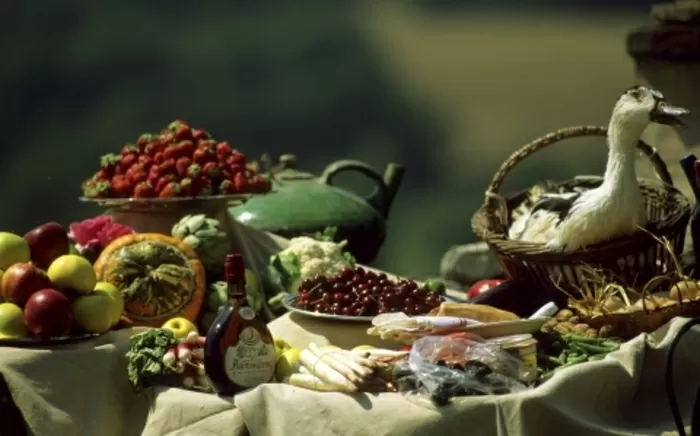
Rearing geese for foie gras and duck rearing are important activities in the area, as are truffles. The economy runs mainly on tourism and food and wine related industries.


Getting to Dordogne and Lot-et-Garonne in Aquitaine

By air: Due to the region’s popularity, the budget airlines operate direct flights to Bergerac from the UK and to nearby Toulouse and Bordeaux. There are direct flights
from Rotterdam to Bergerac and from other Netherlands airports and Germany to Toulouse and from the Netherlands to Bordeaux.
By train: The TGV runs from Paris to Bordeaux in three hours but onward train journeys are slow. Trains run from Bordeaux to Bergerac (2hr 45). The Toulouse line from Paris calls at Souillac and Sarlat.
By road: A10 from Paris then A20/E09 through Souillac and on to Toulouse in the south. From Bordeaux, the A62/E72 runs south to Toulouse. The A89/E70 runs from Bordeaux through Périgueux to Clermont-Ferrand.

Areas of interest

Dordogne

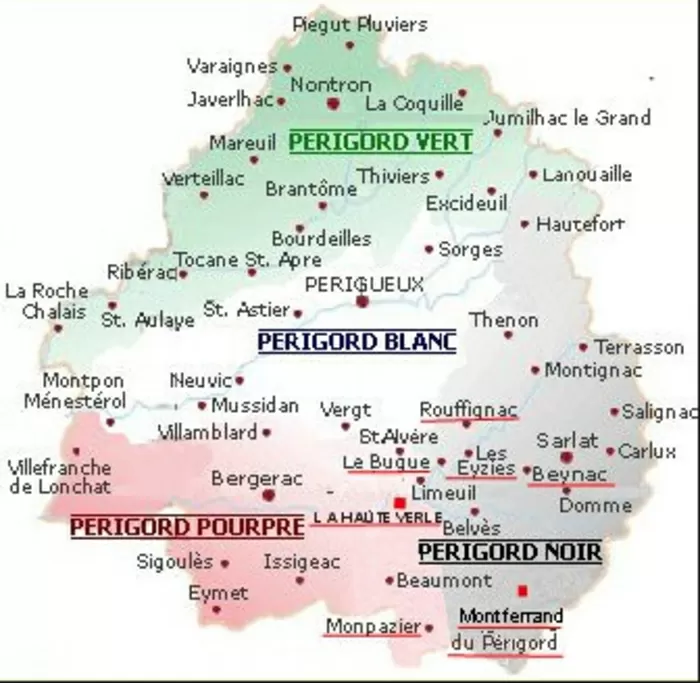
In France, this area is known as Périgord, its name pre-revolution. The tourist administration has divided this up into four colour coded areas.

Périgord Vert, in north section of the Dordogne, a region of verdant valleys with rivers and streams. It is richly forested with predominantly chestnut and oak trees. The main town is Nontron which lies in the Parc Naturel Périgord Limousin. Walking and cycling are popular in the area and tourists can enjoy the horse drawn Romany caravans for hire for a holiday with a difference.

Périgord Blanc runs across the centre and consists of limestone plateaux, wider valleys and meadows, with Périgueux, the capital of the department at its centre.
The Périgord Vert and the Périgord Blanc are not so popular with tourists as the southern west and south east areas.

Périgord Pourpre, in the south west of the Dordogne, named after the colour of the wine, is centred around Bergerac, the main town. Although red wine predominates, white and rosé is also produced and the sweet wines of Montbazillac are renowned.

Bergerac is surrounded by fields of maize, vines and tobacco, Truffles are also discovered here. In the countryside south of the town some of the finest examples of bastides can be found such as Monpazier. In the words of Anthony Peregrine, writing in the UK Sunday Times ‘Essentially, bastides were a medieval planning ploy to drag scattered peasants in from the countryside, put them in one place and make them easier to tax. The town layouts — chessboard street pattern around a central arcaded square and market hall — were so logical and harmonious that they’ve scarcely budged since, except that, these days, they’re hit by an epidemic of craft shops.’

Périgord Noir is where some of the most stunning scenery in the region can be found. Deep sided river valleys of the Dordogne and the Vézère, topped with woodland with oak and pine trees. It includes the stunning villages of Beynac and la Roque-Gageac which is classified understandably as one of the most beautiful villages in France. Other gems in the Périgord Noir include the caves of Lascaux where the finest prehistoric art has been discovered along with a cro-magnon man skeleton, and the caves Les Eyzies.

Sarlat-la-Caneda, a mellow honey stone medieval town, lies just to the north of the river Dordogne. This is a tourist stronghold with pavement cafes, lovely old houses, cobbled lanes and souvenir shops; it shouldn’t be missed but go out of peak season if possible. The Périgord Noir is also famous for goose and duck products: foie gras, paté, terrine, confit and preserves, you name it, they make it.

Lot-et-Garonne

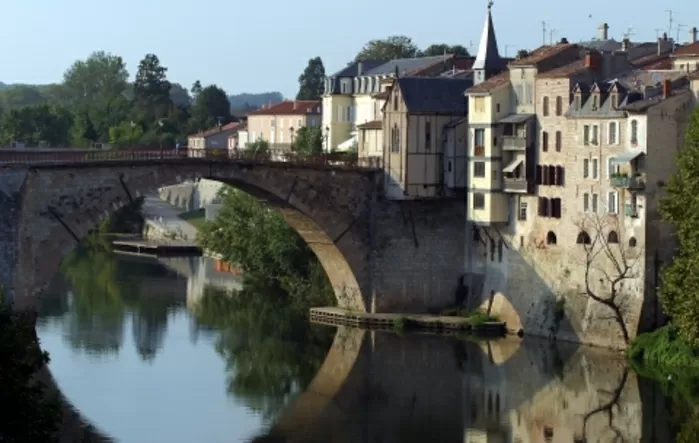
The powerful river Garonne flows through Agen, the main town of this area, half way between Bordeaux and Toulouse. A canal bridge crosses the river – this is the Canal latéral de Garonne, also known as the Canal des Deux Mers, which joins the Mediterranean with the Atlantic.

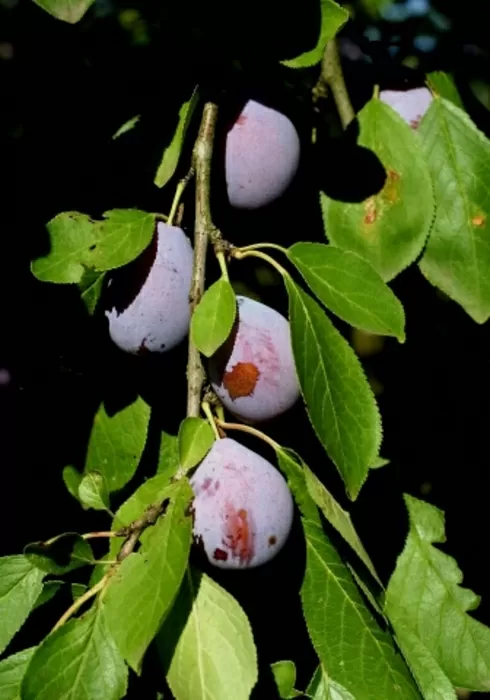
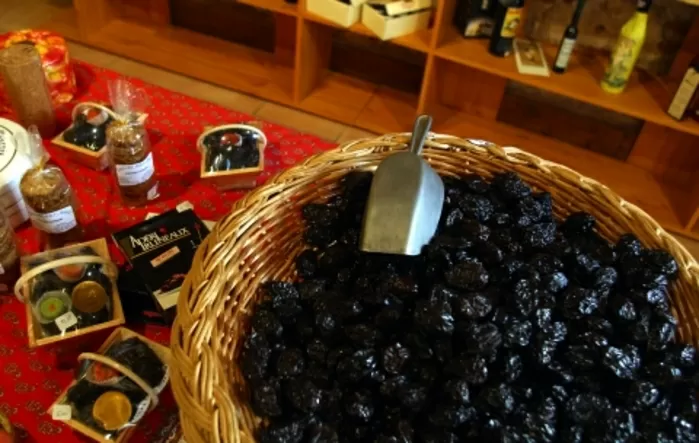
Agriculture and particularly quality vegetables, fruit and plants maybe the trademark but this fertile area is famous for one thing, prunes. In spring the countryside comes alive with white blossom. Agen prunes are considered to be in a class of their own, used in sweet and savoury recipes, made into paté and liqueurs. They even have an AOC.

The Lot-et-Garonne may be a gentle and relaxed place nowadays with pleasing slopes and long views but its history was far from calm. The bastides are a reminder of the Hundred Years war; then there was the civil war of religion causing turmoil. King Henri IV, born to the south of Aquitaine, restored peace and brought prosperity to France in the middle of the 16C and is a local hero, over four hundred years on.
There are still signs of past prosperity although the thriving cloth trade has long gone.


Where to stay and Useful links in this area
For more information:

Bergerac Area : http://www.pays-de-bergerac.com/english/index.asp
Sarlat: http://www.sarlat-tourisme.com/
Perigord Noir : http://www.cc-perigord-noir.fr/index.php
Lascaux : http://www.best-of-perigord.tm.fr/sites/semitour/francais/lascaux2_fr.html


Where to Stay
Dordogne :

Bed and Breakfast
Les Charmes de Carlucet http://www.carlucet.com/
Les Codeliers, Sarlat-la-Caneda http://www.hotelsarlat.com/
Les Chevrefeuille, ST Cypien http://www.lechevrefeuille.com/


Lot-et-Garonne

Hameau de Coquelicots http://www.lehameaudescoquelicots.com/

Domaine de Beunes http://www.domainedebeunes.com/

www.tiensmagazine.com free, online magazine all about South West France.

Aquitaine
South-western region comprising: Dordogne(24), Gironde(33), Landes(40), Lot-et-Garonne(47), Pyrénées-Atlantiques(64)
Population: 2.8 million
Principal city: Bordeaux
Blason Aquitaine France en.wikipedia.org